
Planting
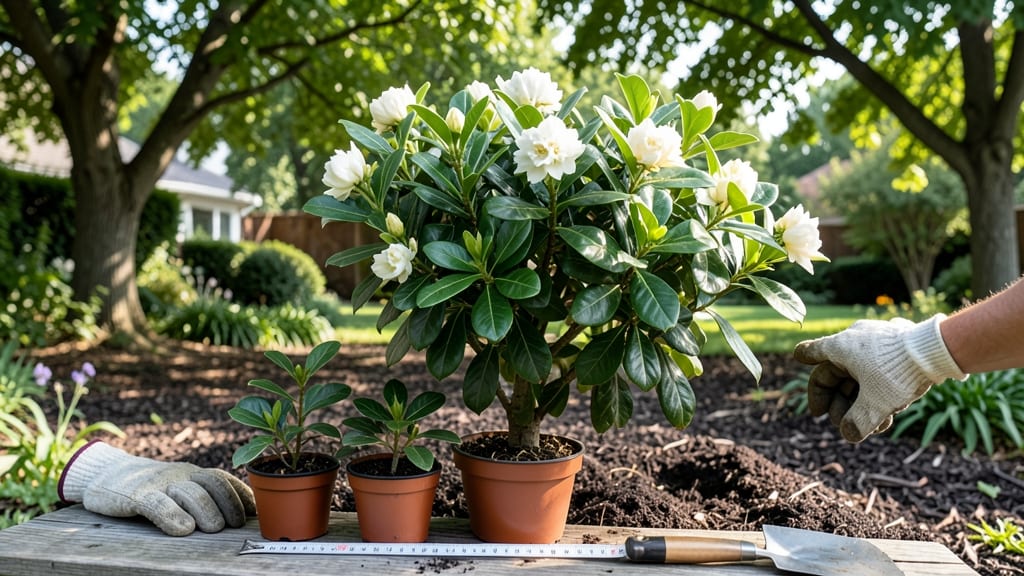
To plant gardenias the right distance apart, space bush varieties 3 to 6 feet apart and tree forms 8 to 12 feet apart for optimal growth. Dwarf gardenias can thrive with just 2 to 3 feet of clearance.
Proper spacing isn't just about aesthetics—it directly impacts your gardenias' health. 🌿 Crowded plants trap moisture, creating the perfect conditions for fungal diseases like powdery mildew. I've seen gardeners struggle with weak blooms because their plants were competing for sunlight and nutrients.
The extra space lets roots spread freely and air circulate, which keeps your gardenias thriving and flowering abundantly.
For smaller gardens, consider planting dwarf varieties in containers or along fences where they can share space without sacrificing airflow. 💫 If you're working with slopes or windy areas, adjust spacing slightly wider to prevent root exposure and maintain stability.
The key is balancing visual appeal with your plants' natural growth habits.
💡 In This Article
- Why Proper Gardenia Spacing Prevents Disease and Boosts Blooms
- Gardenia Planting Layouts for Small vs Large Gardens
Why proper gardenia spacing prevents disease and boosts blooms
Here's what's actually happening when you plant gardenias too close: their dense foliage creates a microclimate with high humidity and poor air circulation. This environment becomes a breeding ground for fungal pathogens like powdery mildew and botrytis blight, which thrive in moist, stagnant air.
The glossy leaves of gardenias are particularly vulnerable because they trap moisture like a greenhouse roof. 🌿 In fact, crowded plants can show signs of fungal infection within just 4-6 weeks of planting if spacing isn't adequate.
The root systems also compete fiercely for nutrients and water. Gardenias naturally develop extensive root networks that spread 18-24 inches wide for mature plants. When roots intertwine, they create a nutrient-depleted zone where plants struggle to absorb phosphorus and potassium—key elements for vibrant blooms.
You'll notice fewer flowers and smaller buds when plants are crowded because they're diverting energy to root competition rather than reproductive growth. The ideal spacing lets roots establish their own territory without battling neighbors.
Sunlight becomes another critical factor. Gardenias need 6-8 hours of direct sunlight daily, but crowded plants cast shadows that block light penetration to lower leaves. This leads to "leggy" growth where stems elongate desperately toward any available light, making plants weak and prone to flopping.
Proper spacing ensures even light distribution, which keeps the plant's energy focused on producing those signature creamy-white, intoxicatingly fragrant blooms rather than stretching for survival.
Consider the leaf-to-leaf spacing as your first line of defense. When leaves are 6 inches or closer, you're essentially creating a humid blanket that slows evaporation and promotes bacterial growth. The waxy coating on gardenia leaves, while protective, can't handle prolonged moisture—it leads to yellowing and premature leaf drop.
I've seen gardeners double their bloom production simply by widening their spacing from 2 feet to 4 feet and adding a small fan to circulate air during hot afternoons.
There's also a fascinating chemical aspect to spacing. Gardenias release volatile organic compounds through their leaves that can inhibit neighboring plants' growth when too close. This isn't immediately visible but shows up as stunted growth and reduced flowering over time.
The 3-6 foot spacing for bushes creates enough distance to prevent this chemical interference while still allowing the plants to benefit from each other's scent—gardenias actually attract pollinators more effectively when planted in small groups rather than solitary specimens.
For tree forms, the stakes are even higher. Those massive canopies can reach 10-15 feet wide at maturity, and their roots spread just as broadly. Planting them 8-12 feet apart prevents the classic "gardenia tree" problem where branches rub together, creating wounds that become entry points for diseases.
The extra space also allows for proper pruning access—you can't effectively shape a tree if you're constantly battling to reach its center through a wall of leaves. 💫
The payoff for proper spacing comes in the blooms. Well-spaced gardenias produce flowers that are 20-30% larger and last 10-14 days longer on the plant compared to crowded counterparts.
That fragrant, velvety bloom you love so much? It's a direct result of giving your gardenias the room they need to thrive—not just survive.