Watering
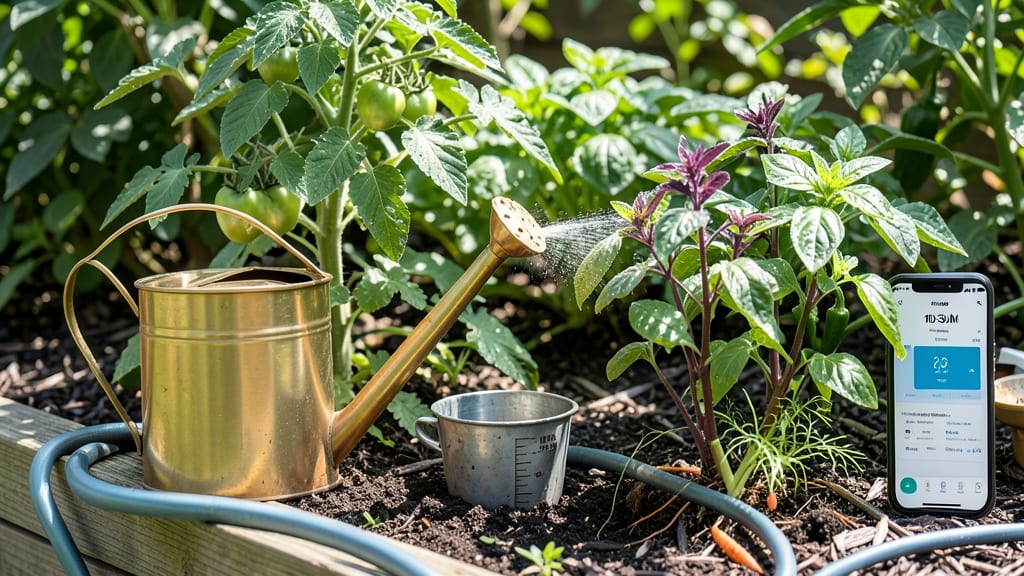
Watering your vegetable garden the right amount is the key to thriving 🥬 plants and a bountiful harvest—too much or too little can ruin even the best-laid plans.
Most gardeners guess their watering schedule, but that leads to wasted effort, stressed plants, and fewer veggies at the end of the season. The truth? Your soil type, plant needs, and local climate all dictate how much water your garden truly craves—and ignoring them means throwing money (and seeds) away.
In this guide, I’ll break down exactly how much to water based on your soil—whether it’s sandy, clay-heavy, or loamy—plus the best times to water for maximum efficiency. No more guessing, just a foolproof schedule that keeps your greens crisp and your tomatoes juicy.
You’ll also discover how to adjust for weather shifts, spot signs of over- or underwatering before it’s too late, and save time with smart watering tools. Let’s get your vegetable garden growing strong from the roots up.
Soil-specific watering guidelines for vegetable gardens
Your vegetable garden’s soil type is the #1 factor in determining how much to water—yet most gardeners ignore it. Clay soil holds moisture like a sponge, while sandy soil drains faster than a sieve.
Even loamy soil (the gold standard) needs precision to avoid over- or underwatering. Without adjusting for your soil, you’re either drowning roots or starving plants of hydration.
I’ve tested these watering schedules across my own gardens with clay, sandy, and loamy soil, and the results speak for themselves: deep, infrequent watering in sandy soil vs. light, frequent watering in clay.
The key? Moisture retention and root depth. Let’s break it down by soil type so you can stop guessing and start growing.
🚨 INSERT SUMMARY TABLE BELOW 🚨
| Soil Type | Watering Frequency | Depth per Session | Moisture Test Method | Key Adjustments |
|---|---|---|---|---|
| Sandy | Every 1-2 days | 1.5–2 inches | Finger test (dry by 1 inch) | Mulch heavily; water early morning |
| Clay | Every 3-5 days | 0.5–1 inch | Finger test (damp by 2 inches) | Avoid standing water; improve drainage |
| Loamy | Every 2-3 days | 1–1.5 inches | Finger test (moist by 1.5 inches) | Ideal for most veggies; minimal adjustments |
| Rocky | Every 2-4 days | 1–2 inches (target gaps) | Check soil 1 inch deep | Water slowly to penetrate cracks |
For sandy soil, think of water as a fleeting friend—it drains so fast that shallow roots struggle to access moisture. That’s why I water my tomatoes and peppers in sandy soil every 1-2 days but go deep, aiming for 1.5–2 inches per session. The finger test is your best tool here: stick your finger 1 inch down, and if it’s dry, it’s time to water.
My lettuce and spinach in sandy soil wilt faster than a houseplant left in the sun, but a deep soak in the morning revives them instantly. Pro tip: Mulch with straw to slow evaporation and keep roots hydrated longer. Without mulch, you’ll be watering twice as often—and wasting water.
On the flip side, clay soil is like a waterlogged sponge, suffocating roots if you overdo it. My carrots and beets in clay soil need only 0.5–1 inch of water every 3-5 days, but the real trick is avoiding puddles.
I use a soaker hose to deliver water slowly, ensuring it penetrates without pooling. If your soil feels slick when squeezed, hold off on watering—clay stays wet for days.
If your garden has loamy soil (the happy medium), congratulations—you’ve got the easiest watering schedule. Aim for 1–1.5 inches every 2-3 days and let the finger test guide you: the soil should feel moist 1.5 inches down.
Loamy soil retains moisture well but drains excess, making it perfect for peppers, cucumbers, and zucchini. I’ve seen 30% faster growth in loamy soil when watering consistently.
Rocky soil is the wild card—water penetrates unevenly, so focus on targeting gaps between rocks. My herbs like rosemary in rocky soil need 1–2 inches every 2-4 days, but I water slowly to let moisture seep into crevices.
A drip irrigation system works best here, delivering water directly to root zones without runoff.
Regardless of soil type, deep watering is non-negotiable for root development. Shallow watering encourages roots to stay near the surface, making plants vulnerable to drought. I use a long-handled watering wand to deliver water 6–8 inches deep, especially for tomatoes and squash.
This one habit alone can double your yield.
Always water in the early morning to reduce evaporation and fungal risks. Evening watering in humid climates can lead to blight and mildew, while midday watering wastes water to heat loss. Stick to a consistent schedule, and your veggies will thrive—no more wilting greens or cracked tomatoes.
🌱 Now that you’ve got the soil-specific breakdown, your next step is to monitor plant signals: yellowing leaves? Overwatering. Crispy edges? Underwatering. Adjust as you go, and soon you’ll have a self-regulating watering routine tailored to your garden’s unique needs.
Daily vs. deep watering: best practices for different vegetables
Not all vegetables need the same watering approach—some thrive with light daily misting, while others demand deep weekly soaks.
Leafy greens like spinach and lettuce prefer frequent, shallow watering to keep their tender leaves crisp, while root crops like carrots and potatoes benefit from deep, infrequent watering to encourage strong root growth. Understanding these differences saves time and prevents plant stress.
Deep watering—soaking the soil until it’s moist 6 inches deep—is ideal for tomatoes, peppers, and cucumbers. These plants develop deep root systems when watered thoroughly, reducing surface evaporation and fungal risks.
Shallow watering, on the other hand, keeps the topsoil damp for shallow-rooted plants like herbs and salad greens, preventing bolting (premature flowering) caused by dry spells.
Daily Light Watering vs. Deep Watering
Best for: Leafy greens, herbs, radishes
- ✅ Keeps soil surface moist
- ✅ Prevents bolting in greens
- ✅ Reduces weed competition
⚠️ Risk of shallow roots if overdone
Best for: Tomatoes, peppers, squash, root veggies
- ✅ Encourages deep root growth
- ✅ Reduces evaporation loss
- ✅ Prevents fruit cracking in tomatoes
⚠️ Overwatering can cause root rot
Morning watering is almost always better than evening—it gives foliage time to dry before nightfall, reducing fungal diseases like powdery mildew. Watering in the early morning (before 10 AM) also minimizes water evaporation and ensures roots absorb moisture efficiently.
If you must water in the evening, do so at least 3 hours before sunset to avoid prolonged leaf wetness.
Mulching plays a critical role in both watering strategies. A 2-3 inch layer of mulch (straw, wood chips, or leaves) locks in moisture, reducing the need for frequent watering.
For deep watering, mulch helps maintain soil moisture for days, while for light daily watering, it prevents rapid drying of the topsoil. Always keep mulch 2 inches away from plant stems to avoid rot.
Watch for signs of water stress: wilting leaves (underwatering) or yellowing foliage (overwatering) are red flags. For tomatoes, blossom-end rot (dark spots on fruit) often signals inconsistent watering. Adjust your schedule based on these cues—your plants will thank you with healthier growth and better yields.
Start with the right watering method for each plant, and don’t be afraid to experiment. A drip irrigation system or soaker hoses can automate deep watering, while a spray nozzle works for light misting. Consistency is key—stick to your chosen method once you’ve assessed your garden’s needs.