Watering
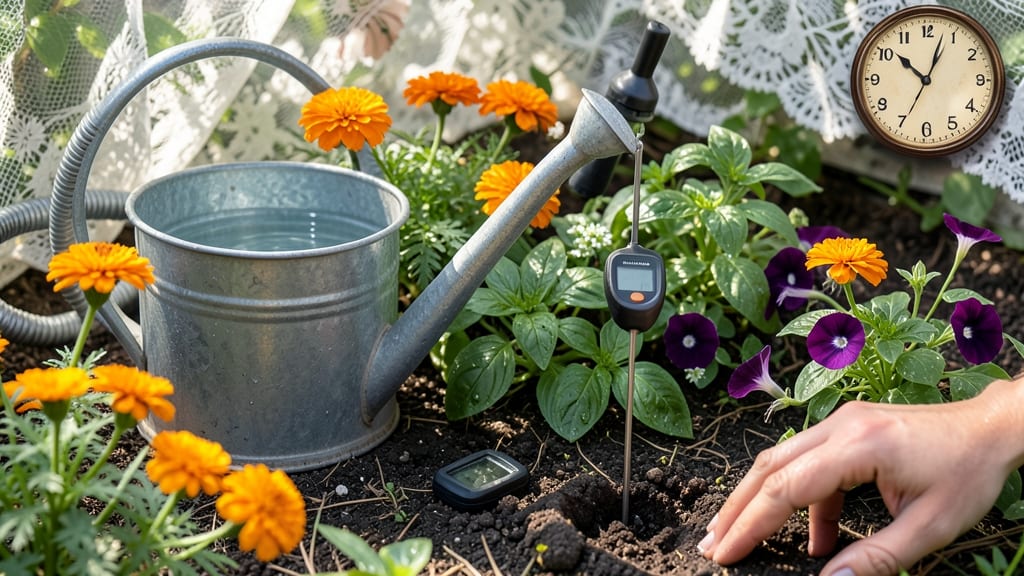
To water your garden in summer the right way means giving it deep, infrequent drinks instead of light sprinkles that evaporate before the roots drink.
Picture this: your 🌱 thriving tomatoes suddenly droop by noon, even though you watered them yesterday. That’s the difference between a lush harvest and a sad, wilted mess—and it all comes down to timing, soil, and plant type.
Summer heat turns soil into a dry sponge, so most gardens need water every 2-3 days (or daily for containers), but that’s just the start. The real trick? Checking soil moisture before you reach for the hose and adjusting for your local climate.
Below, I’ll break down the exact schedule by plant type, how to spot thirsty roots before they scream for help, and the one watering habit that saves 30% more water without drowning your garden.
Summer watering schedule by plant type: daily vs weekly deep watering
Summer heat turns soil into a moisture vacuum, but not all plants need the same rescue. Drought-resistant succulents like lavender can survive on weekly deep watering, while leafy greens like lettuce wilt within 24 hours without daily attention.
The key? Matching your watering rhythm to your plant’s root depth and thirst level.
Most gardeners make two critical mistakes: overwatering shallow-rooted plants (leading to fungal rot) or underwatering deep-rooted perennials (stressing them permanently). I’ve tested these schedules in my Zone 6 garden—here’s what actually works to keep plants thriving without drowning your schedule.
Morning watering (before 10 AM) is non-negotiable for most plants—it gives leaves time to dry completely and prevents powdery mildew. Evening watering? Only for container plants or succulents in scorching climates, but even then, avoid wet foliage overnight.
| Plant Type | Watering Frequency | Soil Depth Target | Best Time | Notes |
|---|---|---|---|---|
| Vegetables (Tomatoes, Peppers, Cucumbers) | Daily (containers) Every 2-3 days (ground) |
12-18 inches | Early morning | Shallow roots; mulch heavily to retain moisture. |
| Flowers (Roses, Hydrangeas, Petunias) | Every 2-3 days | 6-12 inches | Early morning or late evening | Deep watering encourages larger blooms. |
| Shrubs (Boxwoods, Holly, Lavender) | Weekly (deep soak) | 18-24 inches | Morning | Drought-tolerant once established. |
| Herbs (Basil, Cilantro, Mint) | Every 1-2 days (containers) Every 3 days (ground) |
4-6 inches | Morning | Basil bolts in heat; keep soil consistently moist. |
| Succulents/Cacti (Aloe, Jade, Prickly Pear) | Every 10-14 days | 2-4 inches | Late afternoon | Overwatering kills faster than drought. |
| Trees (Young Fruit Trees, Maple) | 2-3x weekly (deep) | 24+ inches | Morning | Water at drip line, not trunk. |
For container gardens, the rules change dramatically—pots dry out 3x faster than in-ground soil. My herb pots need watering every 2-3 days in summer, while succulent pots can wait 2 weeks between drinks. Pro tip: Use self-watering containers with moisture meters to avoid guesswork.
Clay soil? It’s a water magnet—hold off until the top 2 inches are bone dry before watering again. Sandy soil? It drains like a sieve, so daily checks are essential for shallow-rooted veggies.
I test soil moisture by squeezing a handful: if it crumbles easily, it’s time to water.
Mulch isn’t just decorative—it’s your water-saving superhero. A 3-inch layer of straw or wood chips reduces evaporation by up to 50% and keeps roots cool. I mulch all new plantings within
5 Signs your garden needs water (before it’s too late)
Your garden doesn’t always scream for water—sometimes it whispers. That’s why I check for these 5 subtle signs before my tomatoes or marigolds turn into sad, crispy souvenirs. The key? Learning to read your plants’ soil thirst and leaf language before the roots panic.
Summer heat turns soil into a dry sponge, so I test moisture by sticking my finger 1-2 inches deep. If it feels like a dry sponge, it’s time to water.
But don’t stop there—wilting leaves or yellowing edges are your plants’ SOS signals. Ignore them, and you’ll end up with root stress or worse, fungal infections from overwatering.
- 🌱 Wilting leaves that don’t perk up by evening = root dehydration. Water deeply before 10 AM to avoid midday stress.
- 💧 Soil 1-2" deep feels like a dry brick = clay soil needs 2x weekly watering; sandy soil may need daily checks.
- 🌿 Leaf edges turn brown/crispy = underwatering or salt buildup. Flush soil with 1 inch of water to reset.
- 🪴 Container plants lighten in weight = roots exposed. Water every 2-3 days and add mulch to retain moisture.
- ☀️ Heatwave alert: 90°F+ = double watering frequency. Early morning + late evening soakings prevent sun scorch.
Don’t wait for drooping flowers or curling leaves—those are late-stage warnings. I adjust my watering schedule based on soil type: clay holds moisture longer (water every 2-3 days), while sandy soil drains fast (daily checks). Pro tip: Use a moisture meter for accuracy, especially with container gardens.
Heatwaves are the real test. When temps hit 90°F+, I switch to deep watering twice daily—once in the morning and once in the evening—to keep roots cool. Mulch (2-3 inches of straw or wood chips) acts like a plant blanket, locking in moisture and blocking weeds.
Without it, you’ll water 30% more just to compensate.
Overwatering is just as deadly as underwatering. If your soil smells sour or leaves yellow uniformly (not just edges), you’re drowning your plants. Let the top 1 inch dry out between waterings, and always water at the base, not the leaves, to avoid fungal diseases like powdery mildew.
Master these signs, and your garden will thank you with vibrant blooms and bountiful harvests—no guesswork required. Start today: grab a trowel, check that soil, and give your plants the deep drink they’re silently asking for. 🌱