
Tools
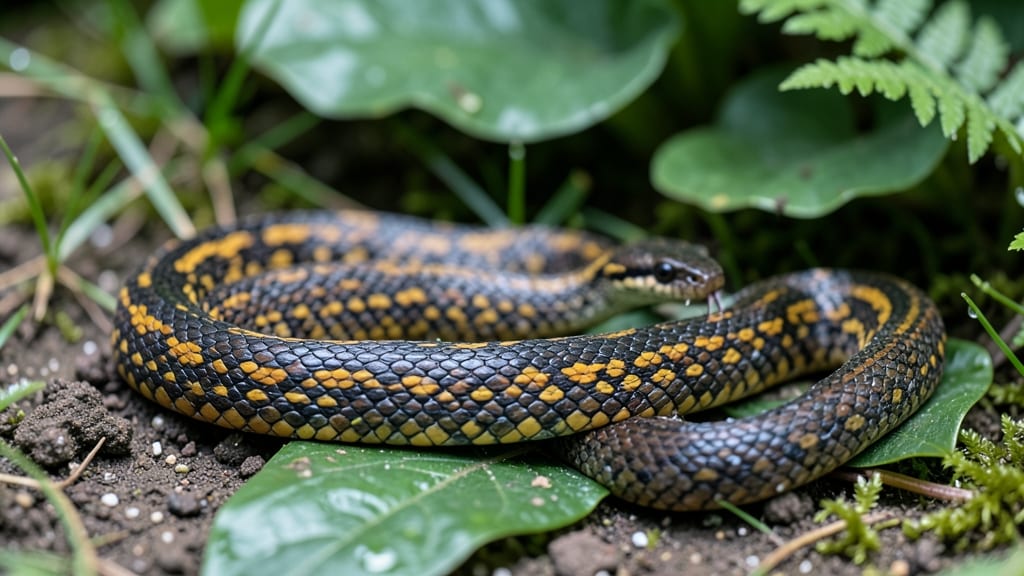
When searching for images of garden snakes, focus on slender, non-venomous species like the common garter snake (striped, 18-26 inches) or rat snake (smooth scales, 3-6 feet), which typically appear in green, brown, or gray blending into grassy or wooded areas. Field photos should highlight their long tails, round pupils, and smooth scales for accurate identification.
Garden snake photography often captures these reptiles in their natural environments, where their camouflage makes them blend seamlessly with foliage and bark. 🌿 The key to spotting them in images lies in their distinctive head shapes—garter snakes have flattened heads, while rat snakes sport more rounded ones.
Many garden snake photos also reveal subtle variations in patterns, such as the bold yellow stripes of garter snakes or the speckled backs of rat snakes, which help differentiate species at a glance.
For the best visual reference, I recommend looking for images that show both dorsal and ventral views, as the belly patterns can be just as telling as their back markings.
Many wildlife databases include close-up shots that reveal these details, making it easier to distinguish between similar-looking species like the corn snake and milk snake. Always check the source credibility to ensure the images are accurately labeled and sourced from reputable field guides.
💡 In This Article
- Identifying Garden Snake Species Through Visual Traits
- Best Sources for High-Quality Garden Snake Photos
Identifying garden snake species through visual traits
Garden snake identification starts with understanding their scale patterns, which act like fingerprints for each species.
For example, common garter snakes feature three bold stripes (usually yellow, green, or blue) running along their backs, while rat snakes display smooth, glossy scales with speckled or blotchy patterns that vary by region.
The head shape also differs: garter snakes have flattened, wedge-shaped heads, whereas rat snakes exhibit rounded, slightly elongated heads—a key distinction when examining photos from above.
Coloration plays a crucial role in habitat adaptation. Northern garter snakes often appear dark green or brown with bright stripes, blending into forest floors, while southern varieties may show paler hues like tan or olive to match sunlit grasslands.
Rat snakes, meanwhile, can range from gray to black, with dorsal blotches that mimic leaf litter. 🌿 In field images, these variations help narrow down species by location—California garter snakes, for instance, frequently display blue stripes, a trait rare in other regions.
The pupil shape offers another visual clue: garden snakes all have round pupils (unlike venomous species with vertical slits), but the eye color can hint at species. Many rat snakes have golden or amber eyes, while garter snakes often feature dark brown irises.
When reviewing photos, note whether the snake’s tail is long and tapered—a common trait in garden snakes, especially males, which use their tails to grasp females during mating. This proportional detail becomes vital when distinguishing juveniles from other slender snakes.
Scale texture provides a tactile confirmation in images. Garter snakes have slightly keeled scales (ridged edges), while rat snakes possess smooth, overlapping scales that give their bodies a sleek appearance. In high-resolution photos, these differences become visible under magnification.
For example, a corn snake (often mistaken for a rat snake) has stronger keels and reddish-brown blotches, whereas a milk snake displays bright bands that mimic coral snake patterns—a classic case of Batesian mimicry where harmless species copy dangerous ones to deter predators.
Regional variations add complexity to identification. In the Pacific Northwest, garter snakes may appear darker and thicker, adapted to cooler climates, while southeastern rat snakes often show lighter underbellies to reflect sunlight in humid environments.
Always cross-reference images with local field guides or databases like the North American Snake Species Photo Gallery, which categorize snakes by geographic range.
For instance, the eastern garter snake dominates the Midwest, while the California kingsnake (a non-venomous constrictor) thrives in arid regions—both look similar at first glance but differ in scale texture and pattern density.
To verify species in photos, focus on three key zones: the head, midbody, and tail.
The head’s width relative to the neck (rat snakes have a distinct neck constriction), the midbody’s scale pattern, and the tail’s length (often 20-30% of total body length in males) provide a reliable triad for identification.
Apps like iNaturalist or Snake ID can overlay these traits onto uploaded images, offering AI-assisted confirmation—though nothing beats a close-up shot of the ventral scales (belly patterns) for definitive answers.