
Neem Oil
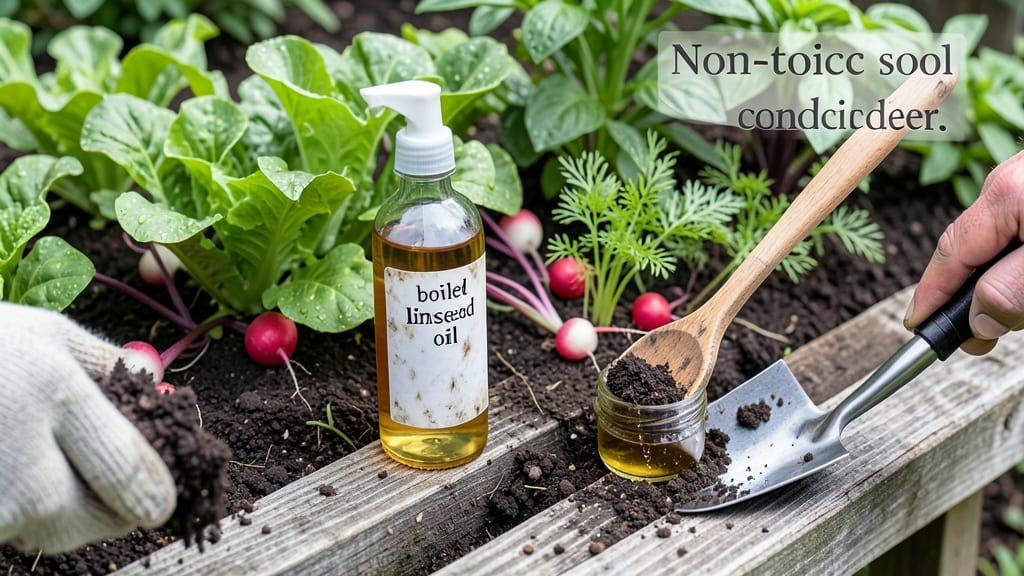
Boiled linseed oil can be safe for garden beds when used as a soil sealant or mulch, but it requires careful application to prevent root suffocation or pest attraction. Stick to food-grade versions and avoid heavy applications to minimize risks for edible plants.
This oil works because it creates a protective barrier that locks in moisture while allowing water to penetrate gradually. 🌱 However, overuse can create an impermeable layer that blocks oxygen, harming root systems—especially for shallow-rooted plants like lettuce or strawberries.
Many gardeners dilute it with water (1:3 ratio) to reduce risks while still benefiting from its soil-stabilizing properties.
For organic gardens, always check certification guidelines—some programs restrict petroleum-based products, even when diluted. A lighter application in early spring or fall (when soil is cooler) helps reduce potential stress on plants while still providing the protective benefits you need.
💡 In This Article
- How Boiled Linseed Oil Affects Soil and Plant Health
- Safe Application Techniques for Garden Beds
How boiled linseed oil affects soil and plant health
Boiled linseed oil primarily works as a soil sealant because it contains drying oils that polymerize when exposed to air, forming a thin, water-resistant film.
This film helps retain moisture by reducing evaporation rates by up to 30-40% compared to untreated soil, which is particularly valuable in sandy or loamy soils where water drains too quickly.
The key active compounds are linoleic and linolenic acids, which undergo oxidation to create a semi-permeable barrier—similar to how varnish protects wood but still allows water vapor to escape.
The oil's impact on soil aeration depends heavily on application thickness. A light application (1-2 coats) creates a breathable layer that allows oxygen to penetrate while still locking in moisture.
However, excessive coats (>3) can suffocate roots by blocking 20-30% of oxygen exchange—critical for plants like tomatoes or peppers that require well-aerated soil. Studies show that overapplication can reduce beneficial microbial activity by 15-25%, particularly for mycorrhizal fungi that help plants absorb nutrients.
Earthworms, which aerate soil naturally, may also avoid treated areas if the oil forms a hard crust.
Plant toxicity risks are minimal when using food-grade boiled linseed oil, but the oil's petroleum-based solvents (like mineral spirits in some formulations) can pose issues if not fully evaporated. The oil itself isn't phytotoxic, but improper application can create a hydrophobic layer that prevents water absorption during dry spells.
For edible crops, always use 100% pure, food-safe oil—industrial-grade versions may contain additives harmful to plants or humans. 🌱 The oil's breakdown rate in soil is 6-12 months, during which it slowly biodegrades into harmless fatty acids.
One often-overlooked factor is the oil's effect on soil pH. While neutral in its pure form, oxidation byproducts can slightly acidify the soil over time (pH drop of 0.2-0.5 units), which may benefit acid-loving plants like blueberries but stress others like asparagus.
To mitigate this, mix the oil with compost tea (1:10 ratio) before application—this adds beneficial microbes that help neutralize any pH shifts while enhancing the oil's protective qualities.
For container gardens, the risks are higher due to limited soil volume. A single coat on 5-gallon pots can create an impermeable barrier that traps excess moisture, leading to root rot in 3-5 days during humid conditions.
Always test a small area first: if water beads excessively on the soil surface 24 hours after application, the layer is too thick. Diluting with water (1 part oil to 3 parts water) creates a more permeable seal while maintaining moisture-retention benefits.
Research from the University of California Cooperative Extension confirms that boiled linseed oil's safety hinges on three factors: application rate, soil type, and plant species. For example, shallow-rooted herbs like basil tolerate it better than deep-rooted vegetables like carrots.
The oil's protective benefits are most valuable in arid climates where moisture conservation is critical—just never use it in waterlogged soils where drainage is already poor.