
Tools
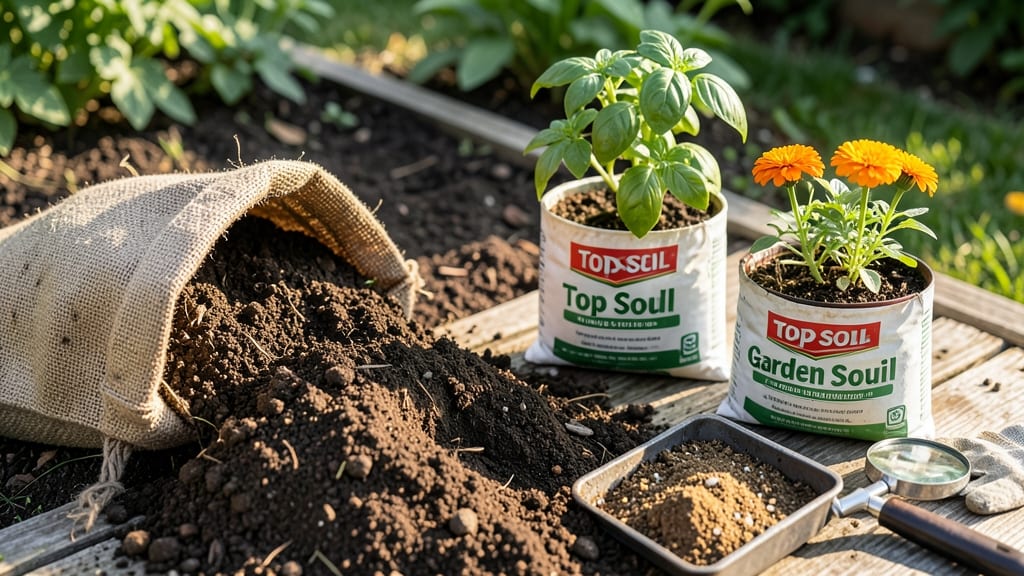
Top soil and garden soil aren't the same: top soil is the natural, nutrient-rich upper layer of earth that supports root systems, while garden soil is a custom blend of top soil with added compost, sand, or other amendments to optimize plant health and growth conditions.
Top soil is what you find naturally in your yard—the rich, organic layer that forms over centuries from decomposed plant matter and minerals.
It's perfect for establishing new plantings because it already contains essential nutrients and microbes. 🌱 Garden soil, on the other hand, is specifically formulated by mixing top soil with other materials to create an ideal growing medium for specific plants.
For example, adding perlite improves drainage for succulents, while extra compost boosts fertility for vegetables. The key difference lies in their purpose: top soil builds the foundation, while garden soil tailors the environment.
Many gardeners mistakenly assume they can use top soil directly for all projects, but that often leads to poor drainage or nutrient deficiencies. I've learned that testing your soil's pH and texture first can save time and frustration.
For instance, clay-heavy top soil might need sand mixed in to prevent compaction, while sandy top soil benefits from organic matter to retain moisture.
💡 In This Article
- Composition Breakdown: Top Soil vs Garden Soil Ingredients
- When to Use Top Soil vs Garden Soil in Your Garden
Composition breakdown: top soil vs garden soil ingredients
Top soil is nature's original growing medium—a complex mixture of decomposed organic matter, minerals, and living organisms that forms over centuries. It typically contains about 5-10% organic material by volume, with the rest being minerals like sand, silt, and clay in varying ratios.
The organic portion provides essential nutrients (nitrogen, phosphorus, potassium) while the mineral content determines drainage and aeration. For example, loamy top soil (equal parts sand, silt, clay) offers ideal balance, while sandy top soil drains too quickly for moisture-loving plants.
Garden soil, however, is an engineered product designed for specific plant needs. It starts with top soil but adds 20-40% organic amendments like compost, peat moss, or coconut coir to boost fertility. Some blends include perlite or vermiculite for better aeration, while others incorporate sand to improve drainage.
The key difference is control—garden soil lets you customize pH levels (e.g., adding lime for acidic plants) or texture (e.g., mixing in bark fines for moisture retention). This scientific tailoring explains why garden soil often outperforms raw top soil in containers or raised beds.
Here's where things get technical: top soil's nutrient profile is passive—it releases minerals slowly through natural decomposition. Garden soil, however, contains "active" organic matter that breaks down faster, providing an immediate nutrient boost.
For instance, a 5-gallon bag of garden soil might contain 5 pounds of composted manure, while top soil from the same volume would have only 1-2 pounds of organic material. This difference makes garden soil ideal for high-demand plants like tomatoes or peppers.
The particle size distribution also varies significantly. Top soil's natural structure often includes larger rock fragments that improve drainage but can create air pockets harmful to roots. Garden soil blends use finer, more uniform particles to create a consistent growing medium.
For example, a 1:1:1 ratio of top soil, compost, and perlite creates a light, fluffy mix perfect for seed starting, while raw top soil might compact and suffocate young roots.
Don't overlook the microbial component—top soil contains natural soil bacteria and fungi that break down organic matter, but garden soil often includes additional beneficial microbes through added compost. These microorganisms create a symbiotic relationship with plant roots, enhancing nutrient uptake.
For example, mycorrhizal fungi in garden soil can increase a plant's water absorption by up to 30% compared to plants grown in unamended top soil.
One common misconception is that all top soil is fertile. In reality, many "top soil" products sold in bags are actually subsoil mixed with minimal organic matter—this explains why some gardeners struggle with poor plant growth when using "top soil" for containers.
The solution? Look for products labeled "top soil" that specify high organic content (typically 10% or more). For critical projects, test your soil's organic matter content using a simple loss-on-ignition test (baking a sample to measure weight loss from organic material).