
Companion Plants
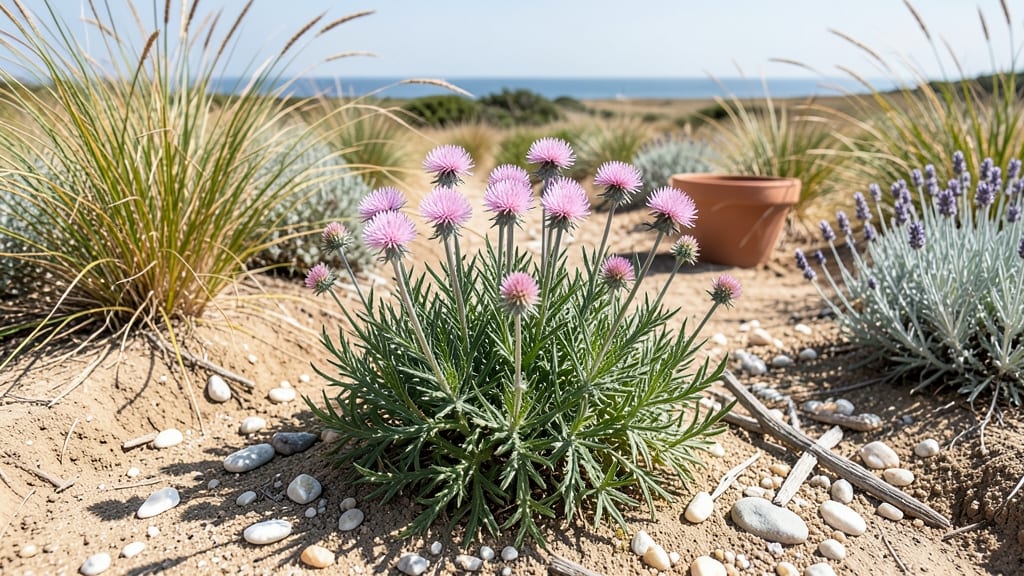
For seaside gardens, salt-tolerant plants like sea oats, beach grass, and sea lavender thrive in coastal conditions, while wind-resistant designs use low shrubs and natural barriers to shield plants from harsh elements. Drought-hardy succulents and resilient perennials also adapt well to salty, sandy soils.
Coastal gardens face unique challenges like salt spray, strong winds, and poor soil quality, but the right salt-tolerant plants can transform these obstacles into stunning landscapes. 🌊 These hardy species—often called halophytes—have evolved specialized mechanisms like thick waxy leaves or deep root systems to filter out excess salt.
For example, sea lavender not only survives but thrives in salty conditions, adding vibrant purple blooms, while beach grass stabilizes sand with its dense root networks.
The key is pairing these plants with smart design: placing taller windbreaks like evergreen shrubs on the windward side creates microclimates that protect delicate foliage, while low-growing ground covers reduce erosion from coastal winds.
What sets these plants apart is their ability to outperform traditional garden species in harsh conditions. 💛 Many homeowners overlook how drought-resistant succulents like sea daisies can add texture and color while requiring minimal water, making them perfect for water-scarce coastal areas.
The secret lies in understanding each plant's specific needs—some prefer well-drained sandy soil, while others tolerate occasional flooding. By combining these salt-loving species with strategic wind protection, you create a garden that's not just beautiful but built to last against nature's coastal challenges.
💡 In This Article
- Salt-Tolerant Plants That Survive Coastal Conditions
- Designing Wind-Resistant Garden Layouts for Coastal Areas
Salt-tolerant plants that survive coastal conditions
Halophytes—plants that thrive in salty soils—have evolved remarkable adaptations to handle coastal environments. Their secret lies in specialized root systems that filter out excess salt through a process called osmotic regulation, where cells maintain higher internal salt concentrations than the surrounding soil.
For instance, sea oats develop deep, fibrous roots that extend up to 6 feet to access freshwater deeper underground, while their leaves have thick cuticles to reduce water loss. 🌊 This allows them to survive in soils with salinity levels up to 10,000 ppm (parts per million), far exceeding what most garden plants can tolerate.
The leaf structure of these plants plays a crucial role too. Many, like beach heather (Erica cinerea), have small, needle-like leaves that minimize surface area and reduce salt absorption.
Others, such as sea lavender (Limonium sinuatum), feature fleshy, succulent leaves that store water and dilute salt concentrations.
These adaptations aren’t just for survival—they also give these plants their signature textures and colors, from the silvery-blue foliage of sea thrift to the deep purple blooms of sea lavender, which thrive in USDA zones 4-9 despite harsh conditions.
Soil preferences vary among salt-tolerant species, but most prefer well-drained, sandy soils that prevent salt buildup around roots. For example, dune grass (Leymus arenarius) stabilizes sand dunes with its extensive root systems, while sea daisies (Erigeron glaucus) tolerate occasional flooding and salty mist.
What most gardeners overlook is how these plants can be combined: pairing deep-rooted species like sea oats with shallow-rooted ground covers (such as creeping thyme) creates a layered ecosystem that mimics natural coastal habitats. This not only enhances resilience but also adds visual depth to your garden.
Drought resistance is another hallmark of these plants. Succulents like sea fig (Carpobrotus edulis) store water in their thick leaves, reducing the need for irrigation, while perennials like beach rose (Rosa rugosa) have waxy coatings that reflect sunlight and conserve moisture.
The result? A garden that requires 30-50% less water than traditional landscapes while maintaining lush, vibrant growth. 💛
When selecting plants, consider their specific salt tolerance levels. For example, sea lavender can handle 5,000-10,000 ppm of salinity, making it ideal for direct beachfront planting, while beach grass prefers 1,000-3,000 ppm and works well in slightly less saline areas.
Testing your soil’s salinity with a simple EC (electrical conductivity) meter can help you match plants to your garden’s exact conditions, ensuring long-term success.
One often-overlooked benefit of these plants is their ability to filter salt from the air through their leaves, reducing the buildup of corrosive salt spray on nearby structures. For example, rosemary and lavender, though not native to coastlines, can tolerate moderate salt exposure and add fragrant accents to your garden.
Pairing them with native halophytes creates a dynamic, multi-functional landscape that’s both beautiful and functional.
The science behind these plants isn’t just fascinating—it’s practical.
By understanding how they manage salinity, you can create a garden that’s not just resilient but also low-maintenance and ecologically balanced. 🌿 Whether you’re stabilizing dunes, reducing erosion, or simply adding color to a windswept yard, these salt-tolerant species are your best allies against coastal challenges.