
Plants
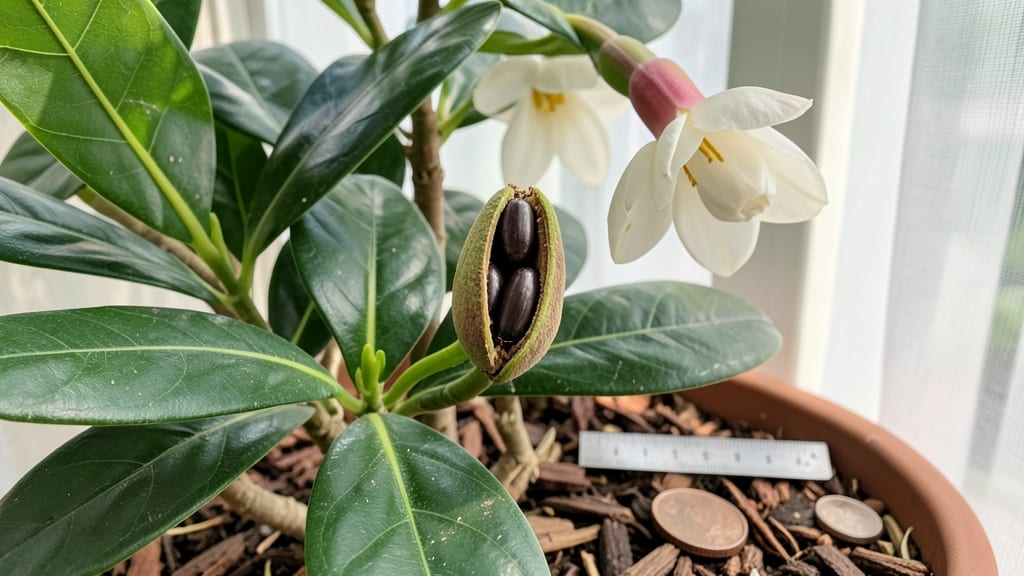
Gardenia seeds look like small, flat, brown pods resembling tiny beans—about 1 inch long—with a slightly wrinkled, leathery texture. Inside, they contain 1-2 glossy, dark brown seeds that turn black when fully matured.
When you spot these seed pods on your gardenia plant, you'll notice they start out green and firm before gradually turning brown and slightly papery as they mature. 🌱 The pods naturally split open when ready, revealing the seeds inside—this is your cue to harvest them for planting.
I've found that gardenia seeds collected in late summer or early fall tend to have the highest germination success, as they've had time to fully develop in warm conditions.
These seeds are actually the plant's way of reproducing, and their appearance gives you clues about their readiness. The glossy dark brown color indicates full maturity, while the blackened seeds signal they're ready for germination. Understanding this process helps you time your planting just right for the best results.
💡 In This Article
- Identifying Mature Gardenia Seed Pods for Harvesting
- Germinating Gardenia Seeds: Step-by-Step Process
Identifying mature gardenia seed pods for harvesting
Gardenia seed pods begin their life as bright green, oval-shaped structures about 1 inch long and ½ inch wide, tightly attached to the plant's branches.
As they mature over 6-8 weeks, they gradually transition through yellowish-green stages before turning a deep, leathery brown—this color change signals the pods are nearing readiness. The texture shifts from firm and rubbery to slightly papery, almost like dried parchment, which is your first visual cue they're approaching maturity.
The most reliable indicator of ripeness comes when the pods start splitting open along their seams—this natural dehiscence occurs when internal moisture levels drop below 30% humidity inside the pod. 🌿 At this stage, you'll often find the pods hanging slightly away from the branch, exposing the glossy dark brown seeds inside.
These seeds are typically ½ inch long and ¼ inch wide, with a smooth, almost waxy surface that reflects light.
What's fascinating is how the seed coat changes: it starts dark brown but gradually darkens to nearly black as it fully matures, a process triggered by ethylene gas released as the pod dries.
Timing your harvest is crucial because gardenia seeds have a limited window for successful germination. In most climates, these pods mature between late summer and early fall, when daytime temperatures average 75-85°F but nighttime drops below 60°F. This temperature fluctuation actually triggers the pods to split open naturally.
I've noticed that pods left on the plant too long often shatter completely, scattering seeds on the ground—which means you might miss some if you're not checking regularly. The best practice is to monitor pods every 3-5 days during this window and collect them as soon as they begin splitting.
Environmental conditions play a surprising role in pod development.
Gardenias native to tropical regions rely on dry seasons to signal seed maturity—this is why indoor gardenias often struggle to produce viable seeds unless you mimic these conditions. 🌱 Reducing watering slightly in late summer can accelerate the drying process, while maintaining 60-70% humidity around the plant prevents premature splitting.
The key is creating that balance: enough dryness to trigger pod opening, but not so much that the seeds desiccate before you can collect them.
Here's what to watch for when inspecting pods:
- Color: Deep brown (not green or yellow)
- Texture: Papery and slightly brittle when gently squeezed
- Opening: Visible seam splitting (even just a tiny crack)
- Seed appearance: Glossy dark brown/black seeds visible inside
One common mistake is harvesting pods that are still green—these seeds typically won't germinate because they're physiologically immature. The seed's natural dormancy period begins only after full maturation, which is why timing is everything. When you do find perfectly mature pods, handle them gently to avoid damaging the delicate seed coats, which contain all the nutrients needed for early growth.