
Tools
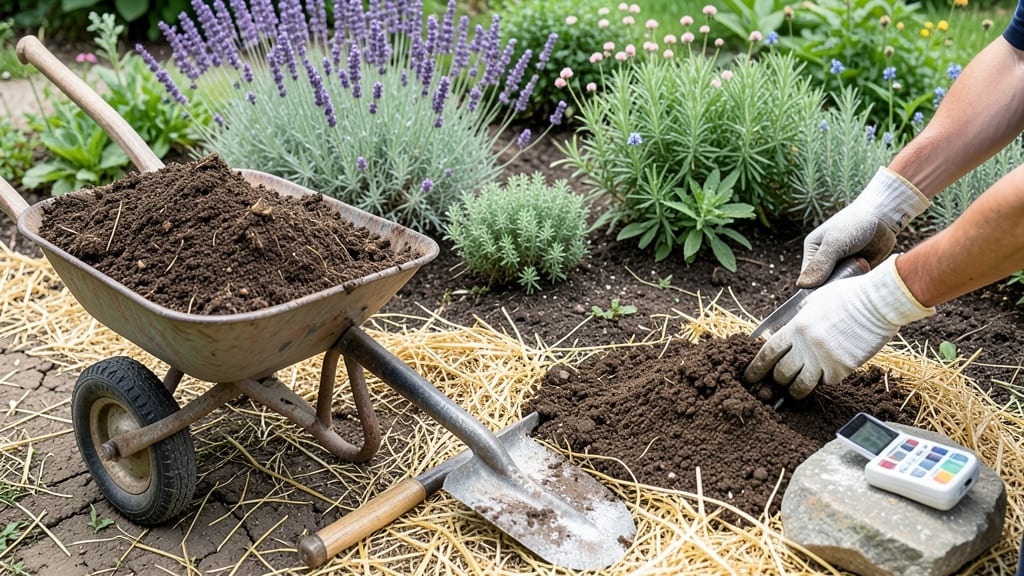
To improve clay garden soil, add organic matter like compost, aged manure, or coarse sand to boost drainage, aerate the soil, and promote root growth while keeping essential nutrients available. Avoid heavy amendments that make compaction worse.
Clay soil's dense structure can suffocate plant roots and limit water movement, but the right amendments create a looser, more fertile growing medium. 🌱 I've found that compost—especially well-aged—works wonders because it introduces beneficial microbes and organic matter that break down over time, while coarse sand or perlite adds immediate physical structure.
The key is balancing texture and nutrition: too much sand can wash away nutrients, but a mix of 20-30% organic matter with 10% sand typically gives the best results for most garden plants.
For best results, work amendments into the top 6-12 inches of soil during spring or fall when the ground is workable. 💫 This gives them time to integrate naturally before planting season.
Heavy clay areas often benefit from a 2-3 inch layer of mulch afterward to slow moisture loss and prevent crusting.
💡 In This Article
- How Organic Amendments Transform Clay Soil Structure
- Best Organic Amendments for Clay Soil by Plant Type
How organic amendments transform clay soil structure
Clay soil's microscopic particles pack tightly together, creating a dense matrix that restricts water movement and oxygen flow to roots. When you add organic amendments like compost or aged manure, their fibrous structure physically breaks up these clay platelets through a process called aggregation.
These amendments contain humic acids and microbial byproducts that act as natural glues, binding clay particles into larger, stable crumbs with 30-50% more pore space than untreated clay. This transformation is critical because those air pockets become highways for oxygen and water, allowing roots to breathe and expand.
The magic happens at the microbial level too. Compost introduces billions of beneficial bacteria and fungi that actively decompose organic matter, producing glomalin—a sticky glycoprotein that further stabilizes soil structure. This biological activity also creates biochannels in the soil, which are microscopic pathways that improve water infiltration.
For example, a single teaspoon of high-quality compost can contain 100 million microbes, each working to break down organic material and release nutrients in forms plants can absorb. The result? Roots grow 2-3 times faster in amended clay compared to unmodified soil.
Moisture management becomes dramatically better too. Untreated clay holds water like a sponge but suffocates roots when saturated. Organic matter creates a sponge-like matrix that holds 2-3 times its weight in water but releases it gradually through capillary action.
This prevents both drought stress and waterlogging. For instance, a 10% compost amendment increases water retention by 40% while still allowing excess water to drain away during heavy rains.
However, not all amendments behave the same. Peat moss, for example, improves structure but is acidic (pH 3.5-4.5), which may require lime adjustments for plants like tomatoes or peppers that prefer 6.0-7.0 pH.
Gypsum (calcium sulfate) is another excellent option because it replaces sodium ions in clay with calcium, reducing compaction without altering pH. The key is matching the amendment to your specific soil test results—most garden centers offer affordable $20 soil tests that reveal exactly what your clay needs.
One common mistake is over-amending with heavy materials like sawdust or fresh manure. These can actually increase compaction as they break down, creating a gummy consistency that's worse than the original clay. The solution?
Stick to well-aged compost (fully decomposed, dark brown, with no recognizable plant pieces) and coarse materials like perlite or vermiculite for immediate structural improvement. A good rule of thumb is to aim for 20-30% organic matter by volume in your amended soil mix.
Seasonal timing matters too. Spring is ideal because the soil warms up, stimulating microbial activity. Fall amendments give microbes time to establish before winter dormancy.
I've seen dramatic improvements in 6-8 weeks when working 3-4 inches of compost into the topsoil layer—just enough to create a "mulch blanket" that protects against erosion and temperature swings.
The visual difference is striking: what was once a hard, cracked surface becomes a loose, crumbly medium that crumbles between your fingers like cake batter.