
Vegetables
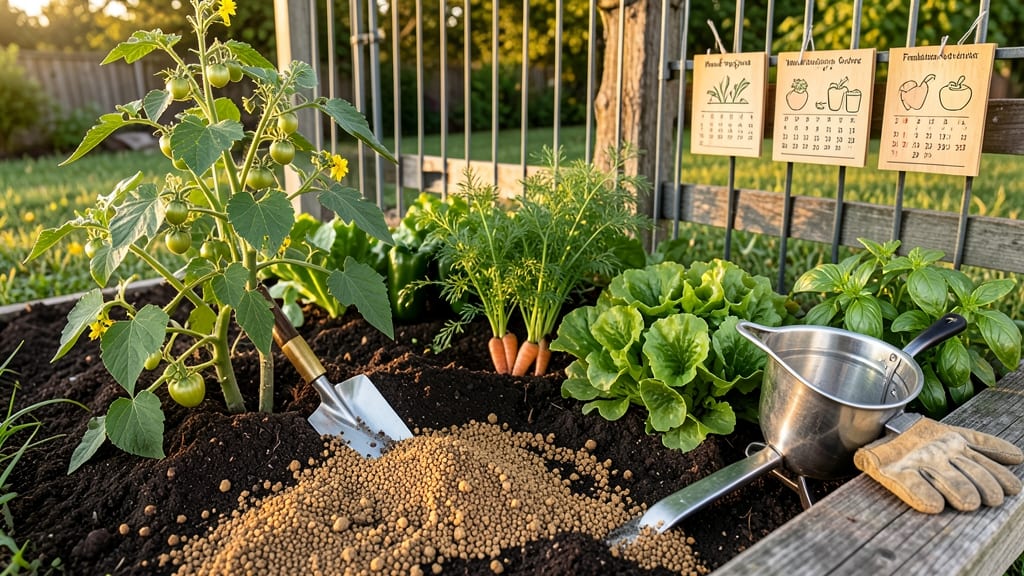
To fertilize a vegetable garden, time applications based on soil tests and plant needs: start with balanced fertilizer in early spring before planting, add nitrogen-rich feedings mid-season for leafy greens, and switch to low-nitrogen options for root crops. Work compost into soil year-round for gradual nutrient release.
Timing matters because different vegetables have unique nutrient demands. 🌱 Cool-season crops like lettuce and spinach thrive with nitrogen-heavy fertilizers in early spring, while warm-season plants such as tomatoes benefit from phosphorus and potassium boosts after transplanting.
I always recommend testing soil first—this helps avoid over-fertilizing, which can burn plant roots or pollute groundwater.
Another key factor is organic matter. Compost or well-rotted manure improves soil structure and feeds beneficial microbes, but it works best when incorporated months before planting. For example, I add compost to my garden beds in late summer or early fall, letting it break down over winter.
This approach builds soil health gradually, reducing the need for synthetic fertilizers later.
💡 In This Article
- Soil Testing and Fertilizer Timing for Vegetable Gardens
- Plant-Specific Fertilization Schedules for Common Vegetables
Soil testing and fertilizer timing for vegetable gardens
Soil testing reveals the exact nutrient levels your garden needs, guiding when and how to fertilize. The three primary nutrients—nitrogen (N), phosphorus (P), and potassium (K)—each play distinct roles in plant growth. For example, nitrogen fuels leafy green growth, while phosphorus supports root development and flowering.
A soil test shows current levels, helping you avoid over-fertilizing, which can harm plants or leach into groundwater. 🌱 Most home test kits cost under $20 and take 2-3 weeks for results.
Seasonal timing matters because plant needs shift with temperature. Cool-season crops like broccoli and peas require nitrogen-heavy fertilizers in early spring when soil is cool (around 50-60°F). Warm-season plants such as tomatoes and peppers, however, need phosphorus and potassium boosts after soil warms to 60°F+ and roots establish.
This is why I always apply a balanced 10-10-10 fertilizer in early spring, then switch to a 5-10-10 blend for fruiting plants later in the season.
Test results also reveal pH levels, which affect nutrient availability. Most vegetables thrive in slightly acidic to neutral soil (pH 6.0-7.0). For instance, if your soil is too acidic (pH <5.5), phosphorus becomes locked away, even if it's present.
In this case, I'd apply lime in fall to raise pH gradually before planting. The goal is to match fertilizer timing with when plants can actually absorb nutrients—not just when you apply them.
Organic matter like compost improves soil structure and feeds microbes that break down nutrients into plant-available forms. Unlike synthetic fertilizers, which provide immediate but short-term boosts, compost releases nutrients slowly over months.
I work in 2-4 inches of compost in early fall, letting it decompose over winter. This approach builds soil health year-round, reducing the need for mid-season fertilization.
Consider these key factors when interpreting test results:
- Nitrogen (N): Essential for leafy greens; apply in early spring and mid-season for fast growth
- Phosphorus (P): Critical for root crops and flowering plants; add at planting for best uptake
- Potassium (K): Supports disease resistance and fruit development; use during active growth phases
For example, if your soil test shows low phosphorus, side-dress with bone meal at planting time. This timing ensures roots have access to phosphorus when they need it most.
The science here is about matching nutrient availability with plant demand—like giving a student extra protein before an exam rather than after. 💫