
Tools
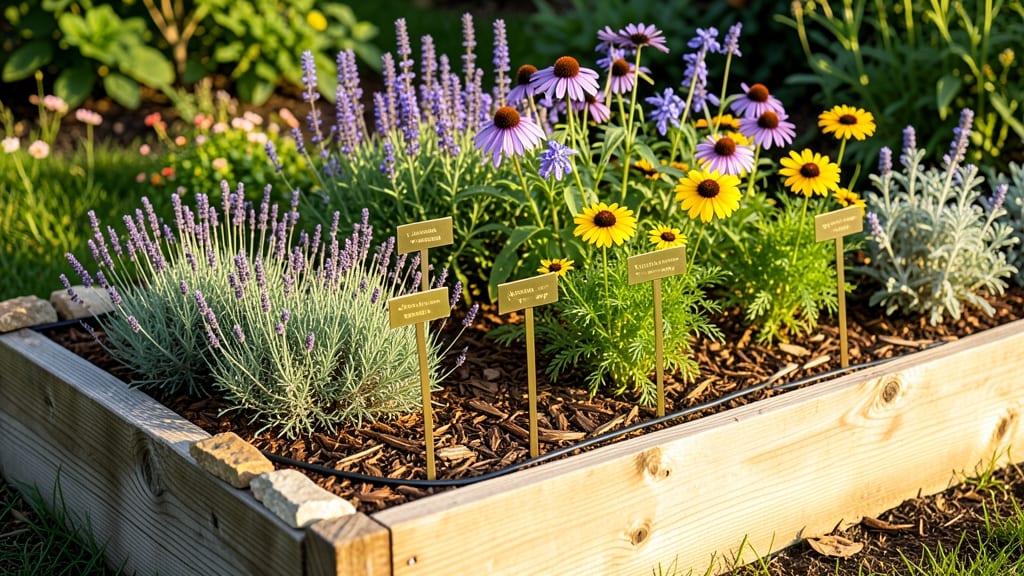
A raised bed flower garden layout creates visual impact by arranging plants in height zones—tall varieties at the back, mid-height in the middle, and low-growing flowers at the front—while grouping plants with similar sunlight and water needs. A 4x8-foot bed provides ample space for diverse blooms, and mulching helps retain soil moisture.
A well-planned raised bed flower garden layout isn't just about aesthetics—it's about maximizing growth potential. 🌸 By organizing plants vertically, you prevent taller varieties from shading smaller ones, which ensures every flower gets the sunlight it needs.
I've found that grouping plants with the same care requirements (like watering needs) simplifies maintenance while creating a cohesive look. For example, pairing sun-loving lavender with drought-resistant succulents reduces your workload while keeping the bed vibrant.
Starting with a 4x8-foot bed gives you flexibility to experiment with different plant combinations without overwhelming your space. The key is to plan for seasonal transitions—spring bulbs like tulips can be tucked beneath summer annuals, which then give way to fall perennials.
This layered approach keeps your garden colorful and thriving year-round with minimal effort.
💡 In This Article
- Designing a Raised Bed Flower Layout by Sunlight and Height Zones
- Seasonal Flower Bed Layouts for Continuous Blooms
Designing a raised bed flower layout by sunlight and height zones
The science behind a successful raised bed flower layout starts with understanding how sunlight drives photosynthesis—the process that fuels bloom production. Plants in the same sunlight category (full sun, partial shade, or shade) have evolved to thrive under specific light intensities.
For example, sun-loving perennials like coneflowers need 6-8 hours of direct sunlight daily to produce vibrant blooms, while shade-tolerant hellebores can flourish with just 2-4 hours. Placing them together ensures each plant gets its ideal light exposure without competition. 🌞
Height stratification isn't just about looks—it's a strategic airflow and light distribution system. Tall plants like delphiniums (reaching 3-5 feet) at the back prevent wind damage to smaller varieties while allowing sunlight to reach lower layers.
The middle tier with 2-3 foot plants like black-eyed Susans creates a natural transition, while front-row annuals like pansies (6-12 inches tall) spill over the edges beautifully. This 3-tiered structure mimics natural forest understory ecosystems where each plant layer has adapted to specific light conditions.
Here's how to implement this in practice: Begin by measuring your bed's sunlight exposure at different times of day. Use a 4x8-foot bed as your base—this size gives you 32 square feet of planting area, perfect for mixing 12-15 plants of varying heights.
Start with your tallest plants (like hollyhocks) against the north side of the bed to prevent them from casting shadows on sun-dependent neighbors during morning light. For partial shade areas, opt for plants like astilbes that thrive with dappled sunlight.
The water factor often gets overlooked, but grouping plants with similar moisture needs (like drought-tolerant lavender with sedum) creates microclimates that maintain consistent soil conditions. Mulching with 2-3 inches of organic material (like shredded bark) helps retain moisture while suppressing weeds.
I've seen beds where this simple layering reduced watering by 30% annually while keeping flowers blooming continuously. The key is to research each plant's native habitat—desert-adapted plants need well-draining soil, while woodland varieties prefer richer, moisture-retentive conditions.
Visual impact comes from color layering too. Place cool-toned flowers (blues, purples) in the back where they'll stand out against warm tones (reds, oranges) in the middle and front. This creates depth perception similar to how artists use color theory in landscapes.
For instance, pairing deep purple salvias at the back with golden coreopsis in the middle and white sweet alyssum at the front creates a stunning vertical progression that draws the eye upward. The sensory payoff is immediate—walking past your bed becomes a visual journey through different color temperatures and textures.
One common mistake is overcrowding the back with too many tall plants, which creates a "wall effect" that blocks light. Aim for 3-5 tall plants per bed maximum, spaced 12-18 inches apart to allow airflow. This spacing also prevents fungal diseases that thrive in stagnant, shaded conditions.
For example, a 4x8-foot bed might accommodate three delphiniums at the back, four black-eyed Susans in the middle, and nine pansies at the front—creating a balanced, breathable structure that looks intentional rather than chaotic. 🌿