
Tools
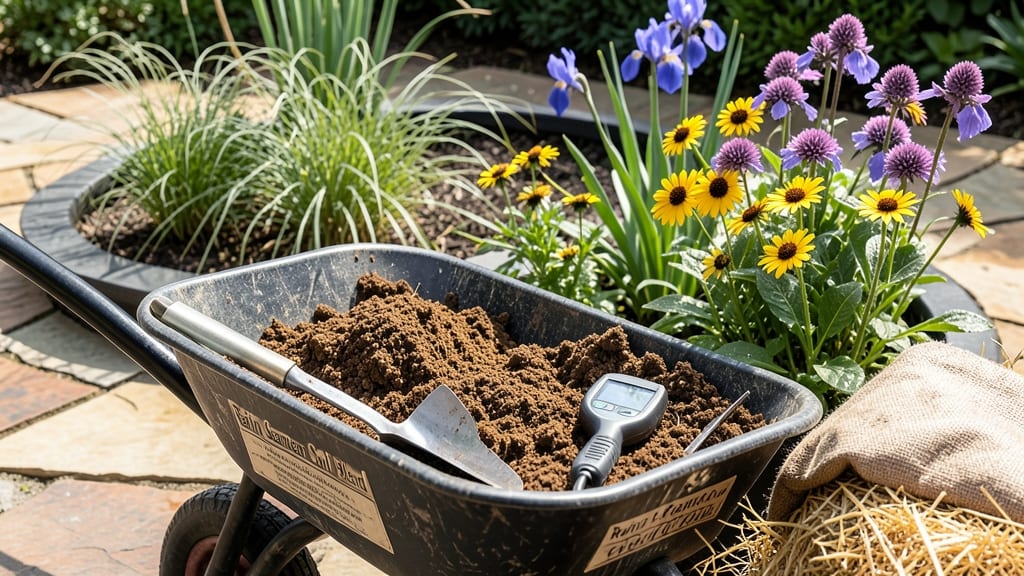
A rain garden soil mix promotes drainage while retaining moisture by blending sandy loam, compost, and organic matter in a 50-30-20 ratio, creating an ideal foundation for native plants and erosion control in wetland areas.
A well-balanced rain garden soil mix is all about finding that perfect equilibrium between drainage and moisture retention.
The sandy loam component ensures excess water flows away efficiently, preventing soggy roots, while the compost and organic matter enrich the soil with nutrients and improve its structure. 🌱 This blend isn't just about function—it also creates an environment where native plants thrive, reducing maintenance while supporting local ecosystems.
The key is testing your soil's natural composition first; if it's too dense, you may need to adjust the sand ratio slightly for better aeration.
This mix works particularly well in low-lying areas where water naturally collects after rain. The organic components break down over time, continuously improving soil fertility, while the sandy texture prevents compaction—a common issue in wetland soils.
For best results, I recommend adding a layer of coarse sand or small gravel at the bottom before mixing everything together. This creates a natural drainage pathway while keeping the topsoil rich and workable for planting.
💡 In This Article
- How to Build the Ideal Rain Garden Soil Composition
- Layering Techniques for Optimal Rain Garden Soil Structure
How to build the ideal rain garden soil composition
The foundation of an effective rain garden soil mix starts with understanding particle size distribution. Sandy loam provides the critical drainage pathway—its coarse particles create air pockets that allow excess water to flow through while still holding onto enough moisture for plant roots.
Think of it like a sponge with medium-sized holes: water drains quickly but doesn't all escape at once. The ideal sandy loam contains about 40-45% sand, 25-30% silt, and 15-20% clay, though you can adjust these ratios based on your native soil's natural composition.
Compost forms the nutrient-rich backbone of the mix, typically making up 30% of the blend. This isn't just any compost—look for well-aged, chunky compost with visible organic matter like leaf litter or shredded wood chips.
The decomposition process releases essential nutrients slowly, creating a "time-release" effect that feeds plants over months rather than weeks. I've found that adding 2-3 inches of compost spread evenly across the planting area works best, especially when mixed with the topsoil.
The organic matter also improves soil structure by binding particles together, preventing them from compacting when wet.
Organic amendments like peat moss or coconut coir make up the remaining 20% of the mix, adding moisture retention and microbial activity. These materials hold water like a reservoir while allowing oxygen to reach roots—a critical balance in wetland areas where waterlogging can suffocate plant systems.
The ideal pH range for most native rain garden plants falls between 5.5 and 7.0, which this blend naturally supports.
If your native soil tests outside this range, you can adjust with lime (for acidity) or sulfur (for alkalinity), but most rain garden plants are surprisingly adaptable once the drainage is right.
What most people overlook is how these components work together to create a living ecosystem. The sandy loam provides physical structure, the compost feeds microbial life, and the organic matter creates the perfect moisture balance.
This trio prevents soil from becoming hydrophobic (water-repellent) during dry spells, which is a common problem in clay-heavy soils.
I've seen rain gardens with this mix support plants like swamp milkweed and blue flag iris that would struggle in standard garden soil because they need both wet feet and good aeration.
For a visual reference, imagine a cross-section of your rain garden soil: the bottom layer should be coarse sand or gravel (about 6 inches deep) to create immediate drainage, followed by your mixed soil blend. This layered approach mimics natural wetland ecosystems where water moves freely through different strata.
The top 6-8 inches should be your custom mix, ready for planting. This structure prevents water from pooling at the surface while keeping roots hydrated during dry periods.
One common mistake is using too much sand, which can create a sterile environment that lacks nutrients. The 50-30-20 ratio is a starting point, but you may need to adjust based on your native soil's clay content.
For example, if your soil already contains 30% clay, you might reduce the sandy loam to 40% and increase compost to 40% to maintain proper drainage.
Always do a simple drainage test by digging a hole, filling it with water, and timing how long it takes to drain—ideal is 30-60 minutes.